
Fairfield County Mugshot Record Basics
A booking photo is made during an arrest or correctional intake. The image is linked to that event, not to a final finding by a court. A person photographed after arrest may later be released on bond, discharged by the court, transferred, sentenced, placed under supervision, or have the case erased. For that reason, Fairfield County released mugshots must be read beside the official docket and custody record.
Connecticut's structure changes where the search begins. Adult state jail and prison functions are run by the Connecticut Department of Correction. Bridgeport Correctional Center is a CT DOC facility that holds both accused and sentenced people. Garner Correctional Institution also houses accused and sentenced people, with a statewide mental health role. Neither facility is a sheriff-run county jail. A town police department may hold the booking image when a person was released before entering DOC custody.
CT DOC says a photograph may be included in offender information. The public search is a current custody and supervision tool, not a permanent archive of every Fairfield County booking. Its data updates daily and can change fast. Youthful Offender records and people held for ICE are excluded, so the absence of a photo or person is not proof that no arrest image was made.
Find Fairfield County Released Mugshots
The best channel follows the custody path. Use CT DOC for a state correctional photo, the arresting police department for a local booking, and BOP for a federal custody record. VINELink can help confirm status but should not be treated as a permanent photo store. News reports and nonofficial mirrors may retain an old image, yet they do not control the government record and may miss later court action.
| Channel | Has a photo? | How to access it |
|---|---|---|
| CT DOC inmate information | May include an offender photograph | Search by inmate number or name and verify identity |
| Fairfield County recent-release feed | No official feed or photo gallery was found | Use DOC, police, court, and records-request channels instead |
| Municipal police records | May hold a booking photograph | Ask the arresting department for the maintained and disclosable image |
| CT SAVIN / VINELink | Interface-dependent | Use mainly for custody status and notifications |
| Connecticut court records | Not primarily a mugshot source | Use the docket to verify the arrest, disposition, and erasure status |
| Federal Bureau of Prisons | Locator is mainly a custody and release source | Use BOP for FCI Danbury identity and release fields |
| News or nonofficial archives | Sometimes | Use as a lead only, then confirm through an official record |
A current CT DOC result may show a photograph plus name, inmate number, date of birth, status, controlling offense, location, admission date, sentence fields, release dates, and detainer information. Match several fields. An image alone is weak evidence because names can be similar and an old caption can lose context.
Connecticut Mugshot Policy in Fairfield County
Connecticut does not require automatic posting of every police mugshot. Section 1-215 governs public records of arrest, while the state Freedom of Information Act supplies the broader access framework. The key ruling is Commissioner of Public Safety v. Freedom of Information Commission, 312 Conn. 513 (2014). The Connecticut Supreme Court required disclosure of basic blotter information and at least one additional statutory item, but it did not treat every requested police report or mugshot as part of the minimum disclosure required while prosecution was pending.
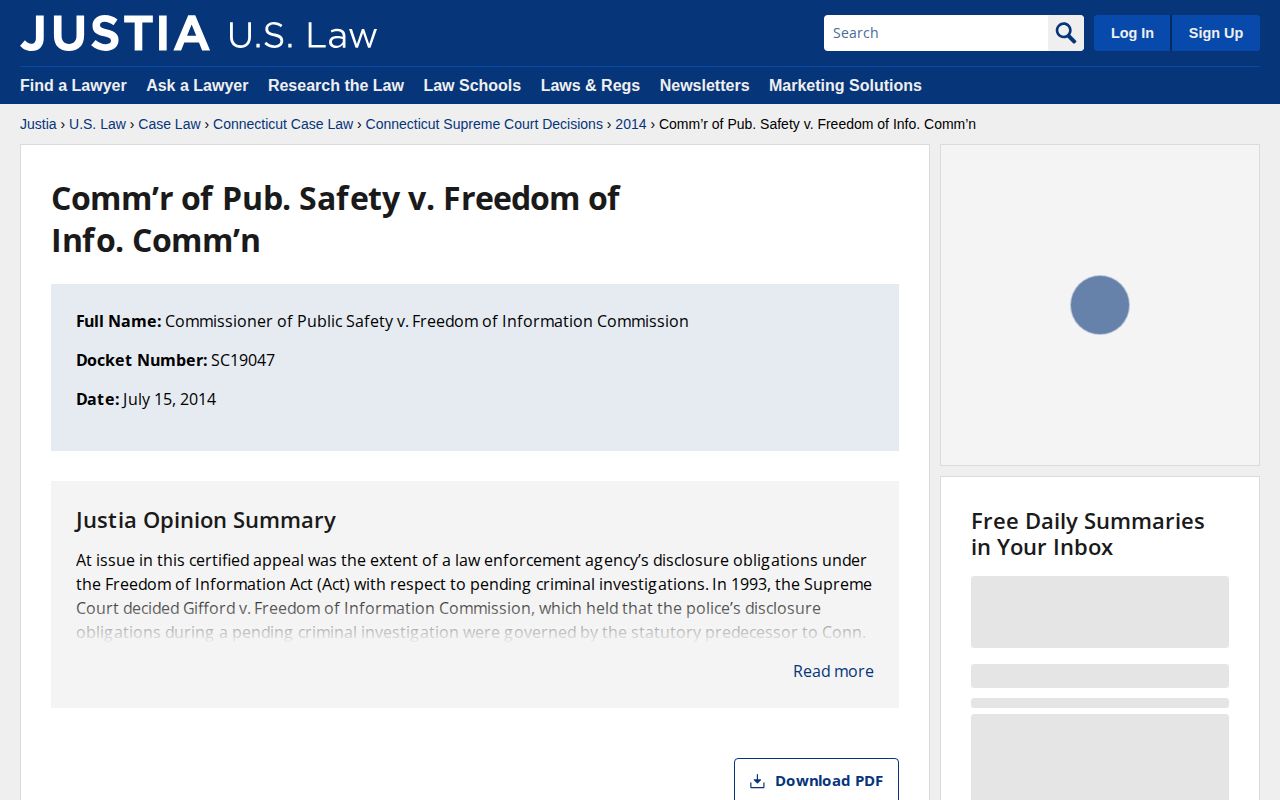
The decision explains why two Fairfield County agencies may provide different responses to similar photo requests. The record, investigation stage, exemption, and agency holdings all matter.
CT DOC photographs follow a different source path from local police booking images. A DOC image may appear with state inmate information when available. A Bridgeport, Stamford, Norwalk, Danbury, Greenwich, Fairfield, Stratford, or Trumbull police photo should be requested from the department that created or maintains it. The fact that basic arrest details are public does not guarantee that the photograph must be posted online.
No Fairfield County Mugshot Feed
No official Fairfield County 24-hour release feed, 72-hour release feed, sheriff roster, or sheriff mobile app with booking photos was found. This is a structural fact, not a missing search. Connecticut runs adult detention through CT DOC. Bridgeport CC is a state correctional center, while Fairfield County itself is not an adult jail authority.
Do not infer that a person was never booked because no county gallery exists. If a town arrest ended with bond or a court release before DOC commitment, contact the arresting police records office. Then check the Judicial Branch criminal lookup for the pending case, conviction, daily docket, disposition, or warrant context. If the person did enter Bridgeport CC or Garner, search CT DOC and ask DOC Public Information about a maintained photo.
The Fairfield County Released Last 24 Hours route explains how to confirm a fresh release without a county feed. Its lack of a photo list should not be replaced by daily population figures, which identify no individual.
Request Fairfield County Booking Photos
A narrow request is easier to process. Identify the agency that made the image first. For a DOC booking or offender photo, CT DOC Public Information is the records route. For a municipal arrest, use the arresting police department. A court clerk can provide docket records but is not necessarily the custodian of a police booking image. Under Connecticut FOIA, §§ 1-210 and 1-212 cover access and copy procedures, while § 1-215 governs arrest records.
- Write the person's full name and date of birth. Add the CT DOC inmate number or court docket number when known.
- Name the arresting agency, facility, approximate arrest or custody dates, and town.
- Ask for the booking sheet, custody and release time, public bond status, and booking photograph if the agency maintains and may disclose it.
- State the preferred format. Ask for an electronic copy when available.
- Request a cost estimate before ordering copying, certification, programming, or other production.
- Keep the agency response and note whether the image was not held, withheld under an exemption, erased, or released.
CT DOC Public Information can be reached at (860) 692-7780 from 8:00 a.m. to 4:30 p.m., Monday through Friday, or by mail at 24 Wolcott Hill Road, Wethersfield, CT 06109. Include exactly what is sought. Connecticut law permits copy fees, but the research did not identify one fixed price for every booking-photo request. Ask for an estimate rather than assuming a charge.
An agency may provide basic arrest information but not the photo. That outcome can be lawful depending on the record and legal context. A denial should identify the agency and reason so the correct review or legal process can be considered.
Verify Fairfield County Photo Context
A mugshot must be paired with the record behind it. The Connecticut Judicial Branch criminal lookup offers pending case searches, conviction searches, daily dockets, and arrest-warrant links. It can show whether the arrest led to a pending matter, conviction, dismissal, nolle, sentence, or probation order. The court system also warns that its information may change daily due to erasures, corrections, pardons, and other lawful changes.
Custody status requires its own check. A person still shown at Bridgeport CC or Garner remains in a CT DOC facility unless the daily record has not caught up. No current location could reflect release, transfer outside a displayed category, an excluded record, or a search mismatch. For FCI Danbury, use the BOP Inmate Locator. A federal result marked Released or Not in BOP Custody is not a Connecticut DOC release record.
Registries are also separate. The Connecticut sex offender registry and deadly weapon offender registry apply only when the legal requirements for those registries are met. Registry presence does not establish that a person was recently released, and absence does not settle the arrest or custody history.
Fairfield County Erasure Changes Visibility
Connecticut erasure law can change what remains available through an official lookup. Chapter 961a, including § 54-142a, governs criminal record erasure. Clean Slate Connecticut describes automatic erasure for eligible older and low-level convictions and cannabis-related erasures. The Judicial Branch states that conviction information is generally displayed for no more than ten years after sentencing unless a shorter period applies. It is removed shortly before that display period ends.
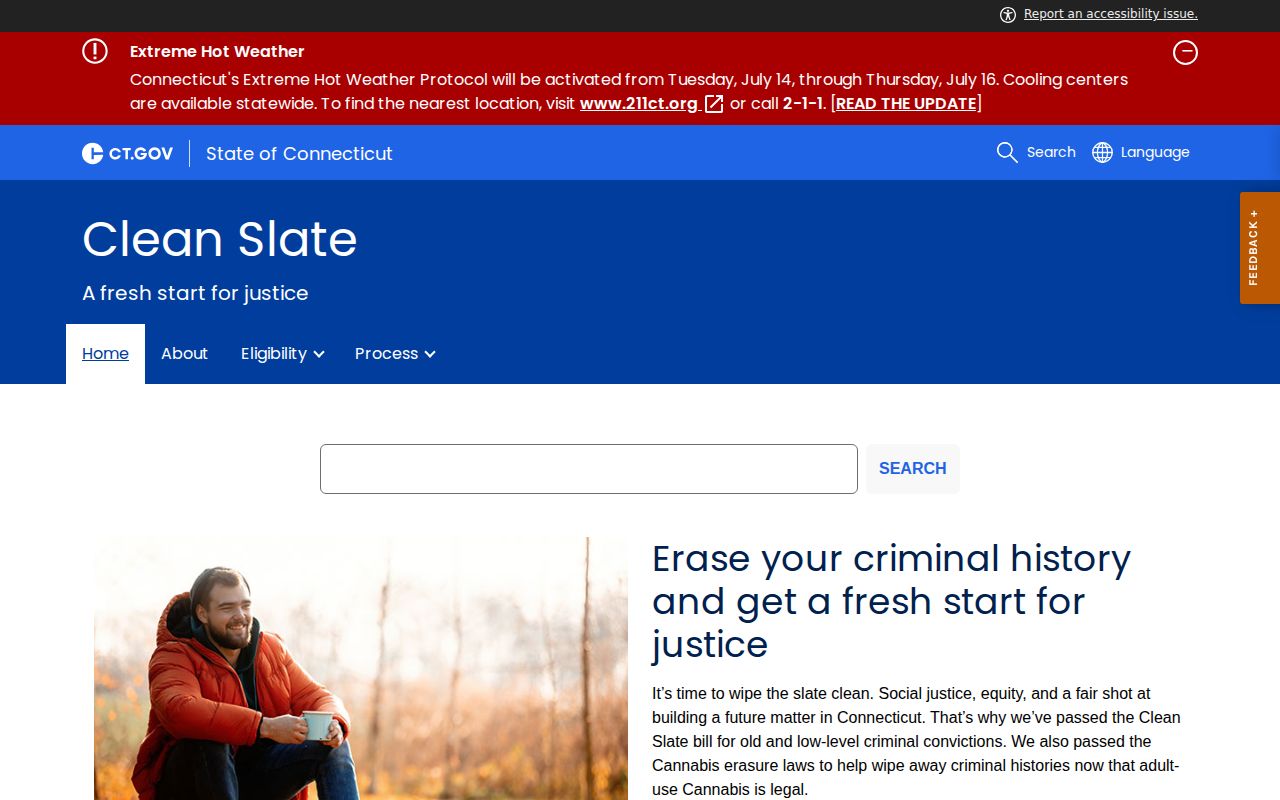
The state source helps explain why a court result or linked arrest context may disappear even though an old copy once existed.
Erasure, correction, pardon, and sealing can affect official public access. They do not guarantee that every news archive or nonofficial copy will update at the same time. No Connecticut anti-pay-to-remove mugshot statute was identified in the reviewed sources, so none should be claimed. For an official record, start with the court or agency process. For an outside publication, review its correction and removal standards without treating a paid removal offer as an official remedy.
Fairfield County Secondary Mugshot Sources
Local news may publish a booking or court-related photograph in a matter it reports. Nonofficial archive and aggregation services may also copy an image. These channels are secondary. An image can outlast the caption, miss a dismissal, remain after an erasure, or show a person whose custody status has since changed. No commercial mugshot publisher or data broker is an official Fairfield County source.
Use a secondary image only to identify which government agency or case may hold the source record. Then verify the person's identity, arrest date, docket, disposition, and current custody through CT DOC, the Judicial Branch, the arresting police department, BOP, or another responsible agency. Do not treat publication date as release date. News coverage can be posted before trial, after a hearing, or long after the custody event.
A records-based check protects against stale context. It also respects the difference between an arrest image and the later legal result.